CNC stands for Computer Numerical Control. It is a manufacturing process in which pre-programmed computer software directs the movement of tools and machinery. CNC machining can operate a wide range of complex equipment, such as milling machines, lathes, laser cutters, waterjet cutters, and electrical discharge machines (EDM), to perform highly accurate three-dimensional cutting operations.
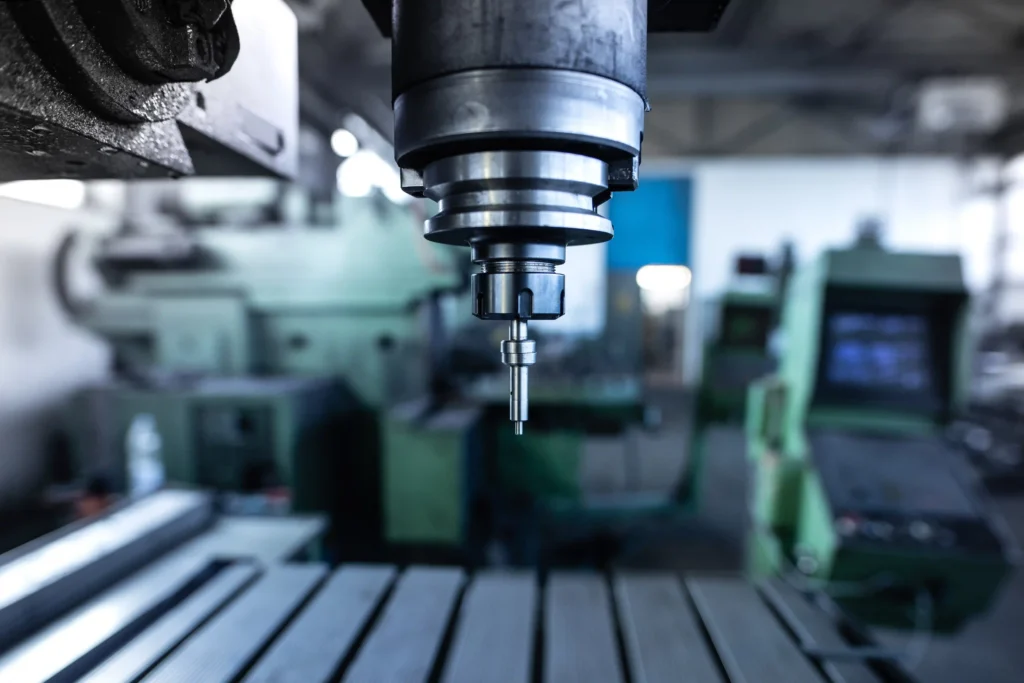
This method uses a rotating, multi-point cutting tool to remove material from the workpiece. Traditional milling machines operate on three axes (X, Y, and Z), where the workpiece remains stationary while the cutting tool moves along these axes.
Modern CNC mills, however, often support additional axes. 4-axis and 5-axis machining provide greater flexibility and precision, making them well-suited for manufacturing complex geometries and high-accuracy components.
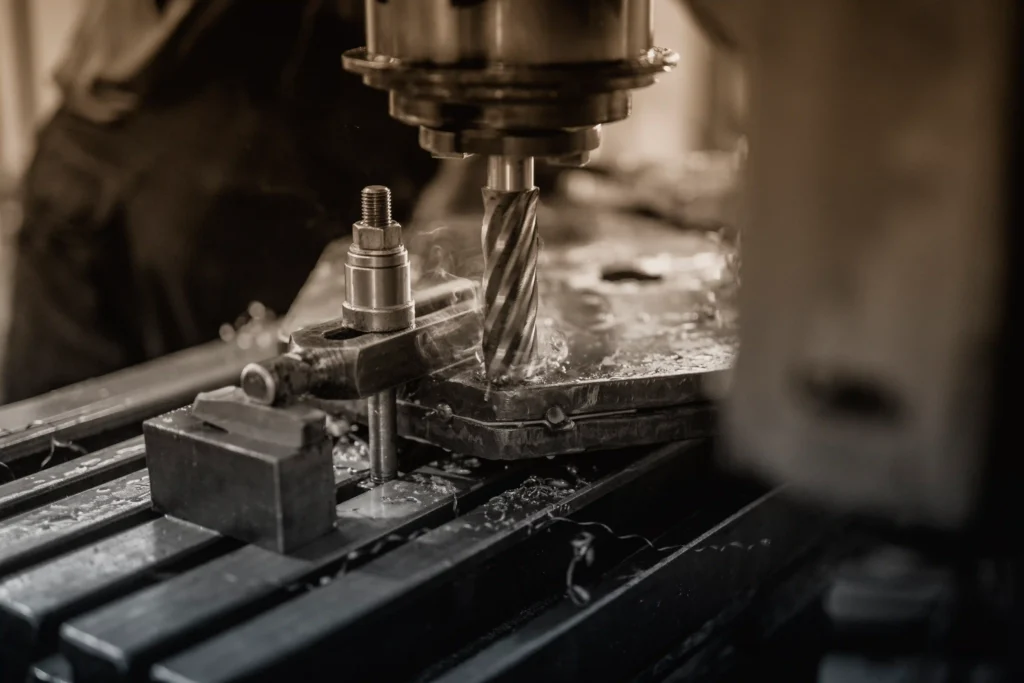
The process begins when a digital design file is programmed into CNC software and linked to the corresponding tools and machines. Once activated, the system executes the programmed instructions to carry out the required cutting operations.
Typical stages in CNC machining include:
