Vacuum casting is a manufacturing method in which a vacuum draws liquid material into a mold, commonly used for elastomers and resins. This process is particularly advantageous when there is a risk of air entrapment or when molds feature fine details, complex geometries, or undercuts. It can also be applied to molds reinforced with fibers or wires. In some contexts, the technique is linked to thermoforming, as it is used in rapid prototyping where plastic sheets are preheated. During the process, materials are softened in an automated vacuum casting machine until they become pliable and suitable for molding.
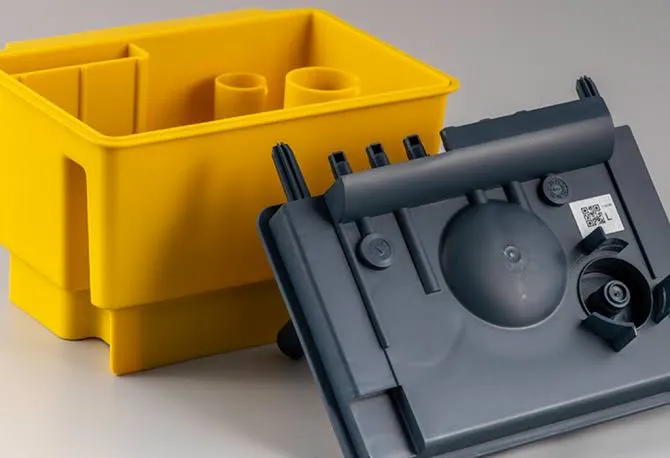
In one approach, plastic films and dry sand are shaped over a pattern with the help of heat, vibration, and vacuum to form a mold that replicates the part to be produced. Vacuum suction keeps the mold securely in place while molten metal solidifies inside it.
Using silicone molds ensures that the final parts are reproduced with remarkable accuracy. The process captures even the most intricate geometries, allowing the finished product to closely match the master model in every detail.
Vacuum casting delivers parts with outstanding surface finish and durability. By choosing from a wide range of resins, manufacturers can tailor the mechanical properties of the product—such as hardness, flexibility, or rigidity—while also influencing its overall appearance.
Compared to traditional methods, vacuum casting offers a more economical option for manufacturing. Silicone molds are significantly less expensive to produce than metal molds (such as aluminum or steel), yet they still provide high-quality results. This makes the process ideal for prototypes and small-batch production.Moreover, a single silicone mold can be reused to produce multiple parts, making vacuum casting more economical than 3D printing.
Vacuum casting is a fast and efficient process, capable of delivering functional prototypes in a short time. For instance, up to 50 parts can typically be produced within seven to ten days. This makes the method particularly valuable for larger production runs as well as projects that require quick turnaround times.
